 Courts Illustrated
Austin Courts & Floors
Court builder serving Austin and Central Texas: pickleball, basketball, tennis and multi-sport courts, plus indoor sport flooring.
Company
Austin Courts & Floors
Service area: Austin & Central Texas
At a glance
- Founded1978
- Headquarters10208 Highway 620 North, Austin, TX 78726
- Phone512-335-9779
- Emailinfo@austincourts.com
- Service areaAustin & Central Texas
- Building courts since 1978, with over 45 years of experience
- Formerly Sport Court of Austin; led for nearly 50 years by founders Greg Dettman and Vic Sanchez
- Employee-owned
- Sport Court products dealer for Central Texas
What it costs
Austin Courts & Floors publishes these prices. That kind of openness is rare in this industry, and it's one of the best signs you're dealing with a builder you can trust.
| Backyard game courts | About $25–$35 per square foot (industry standard, per their pricing page) |
|---|---|
| Shooting court (500–1,200 sq ft) | $15,000–$42,000 |
| Pickleball court (1,800–2,300 sq ft) | $40,000–$80,500 |
| Tennis court (5,000–7,200 sq ft) | $120,000–$250,000 |
| Modular gym floor | $8–$12 per square foot, before subfloor prep and accessories |
| Concrete foundation | $8–$12 per square foot |
| Adjustable basketball hoop | $2,000–$3,500 |
| Wired LED court lighting | $1,500–$10,000 |
Prices as published by Austin Courts & Floors, checked 2026-11-25. Your quote depends on your site.
Questions buyers ask
How much does a backyard game court cost in Austin?
Austin Courts & Floors puts backyard game courts at about $25–$35 per square foot. Their published ranges run from $15,000–$42,000 for a shooting court to $40,000–$80,500 for a pickleball court and $120,000–$250,000 for a tennis court.
How much does a modular gym floor cost?
Typically $8–$12 per square foot for a new modular gym floor, not including subfloor prep, accessories or maintenance. A 5,000 sq ft gym runs roughly $40,000–$60,000.
How long has Austin Courts & Floors been building courts?
Since 1978. The company was formerly Sport Court of Austin and describes itself as the original and longest-operating court builder in Austin and Central Texas.
Notable work
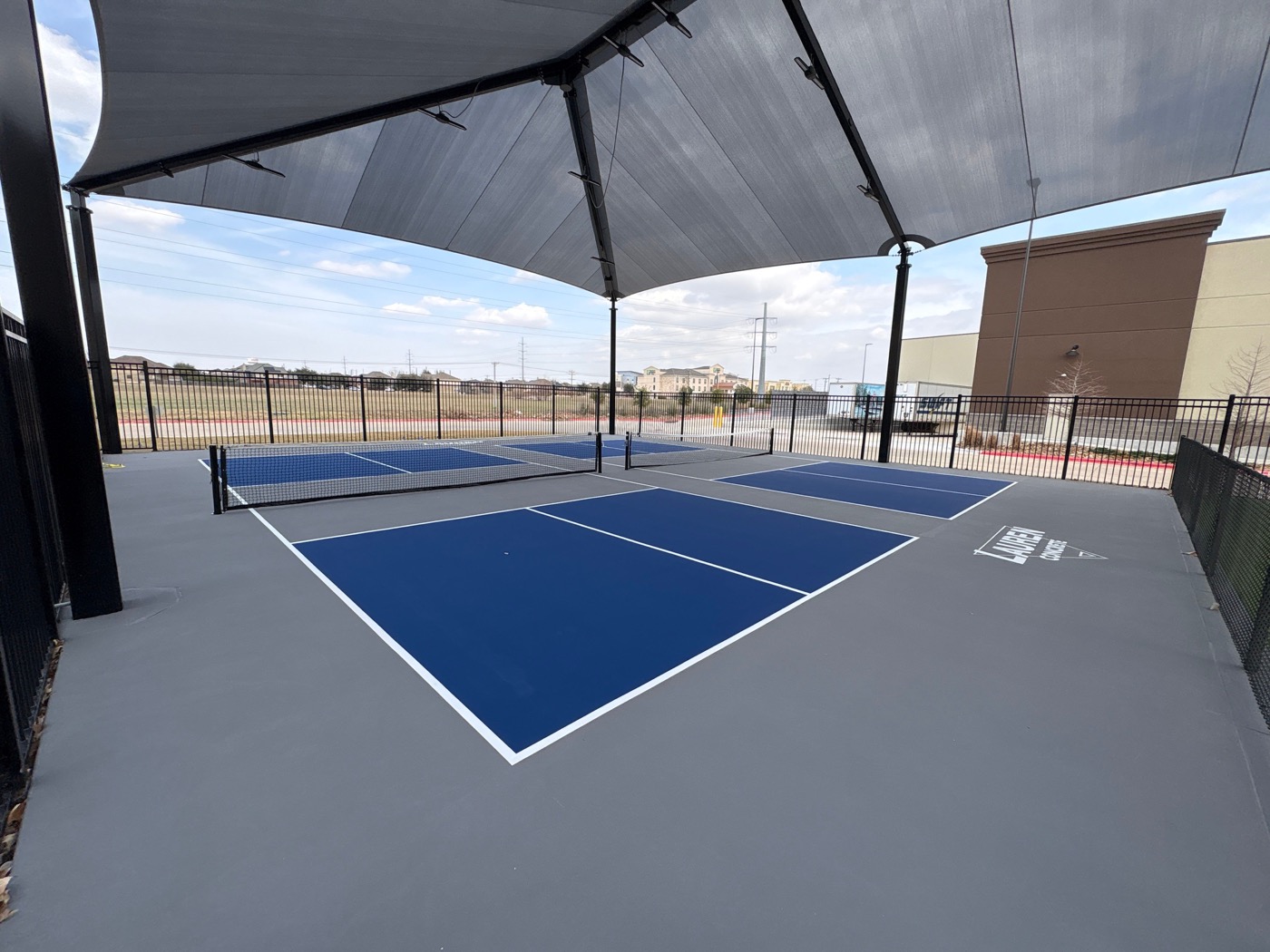
- Tennis-to-pickleball conversion at Oak Run apartments
- Historic Georgetown gym renovation (Georgetown, TX; gym in use since 1966)
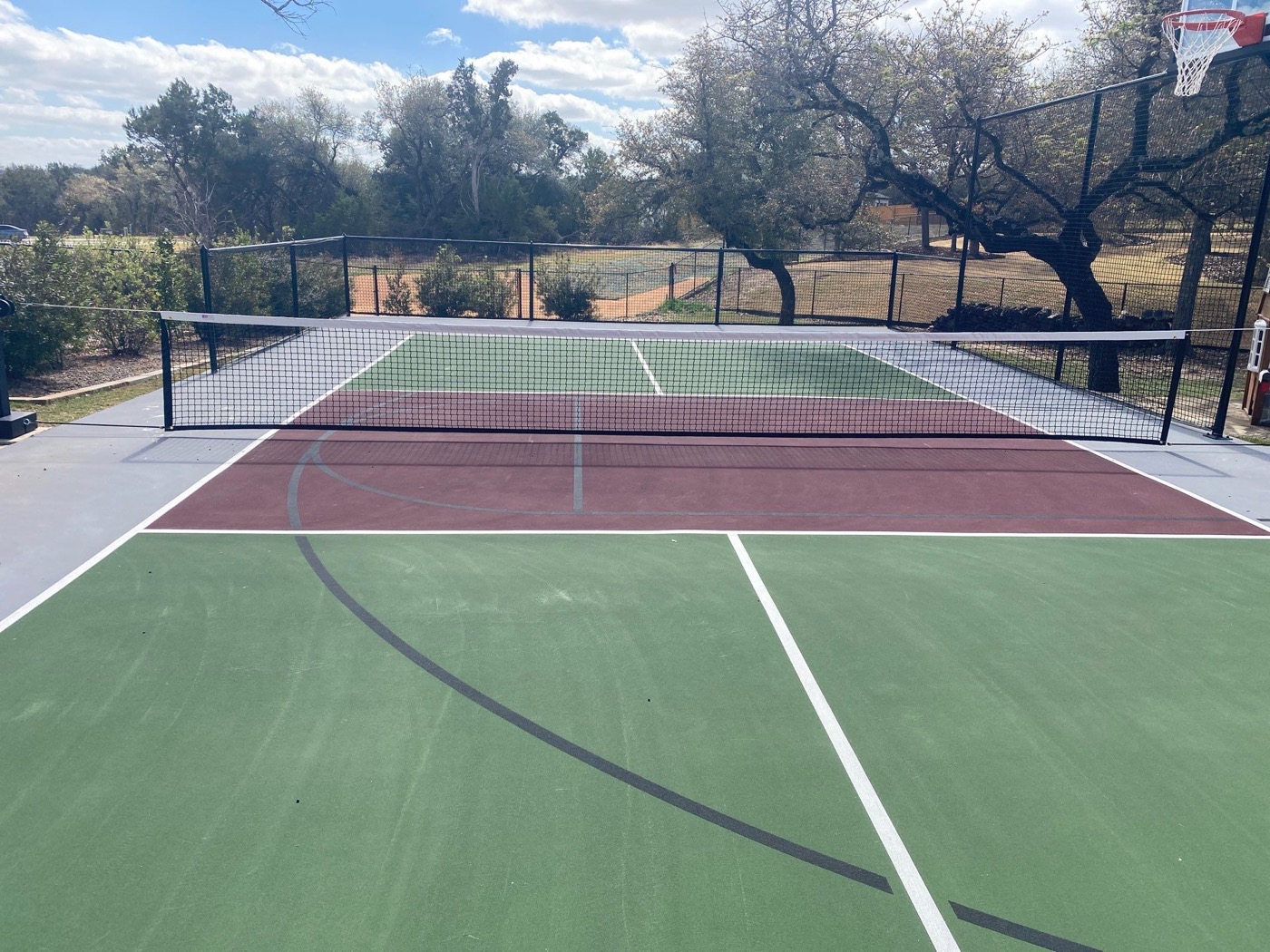
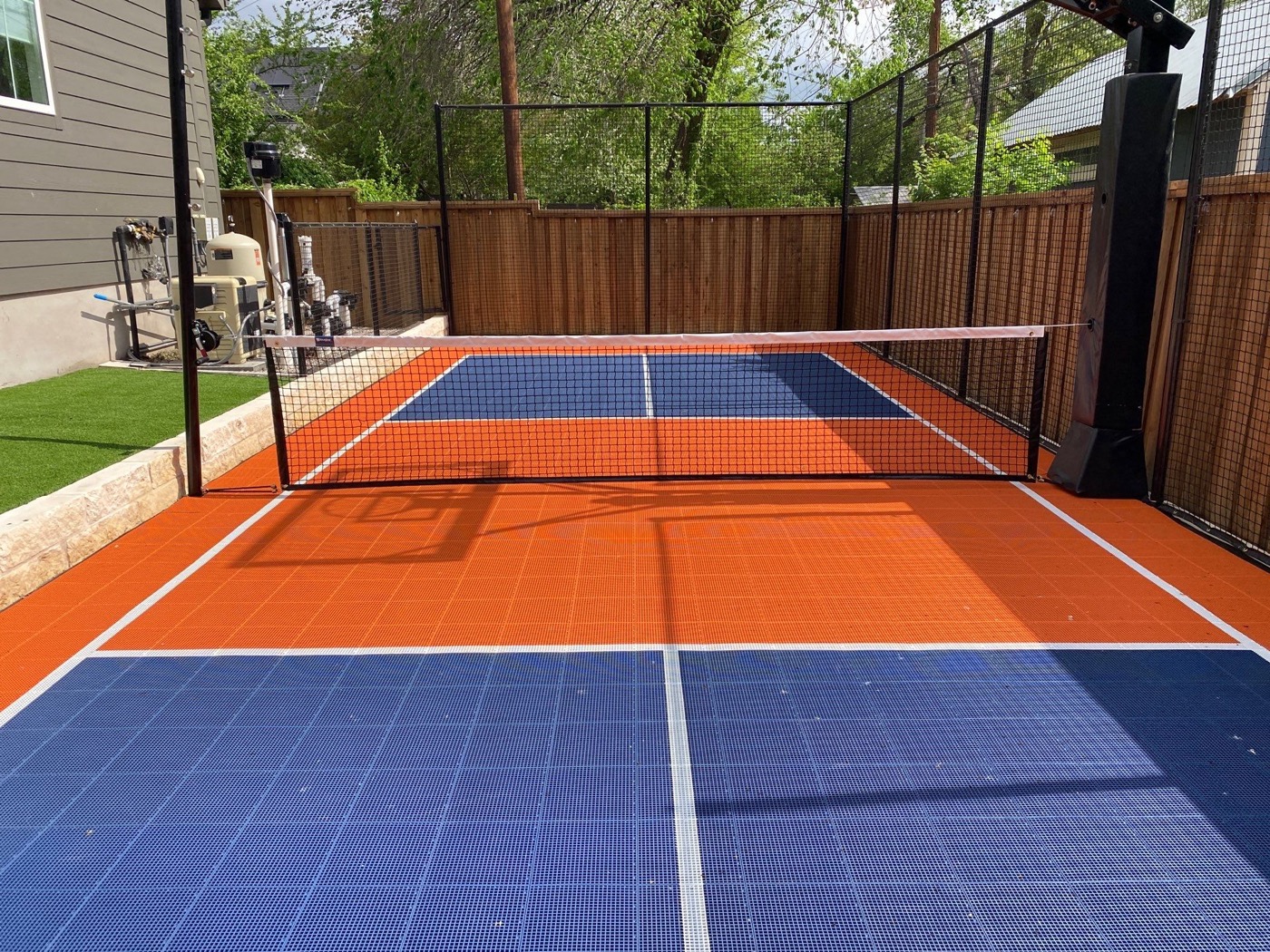
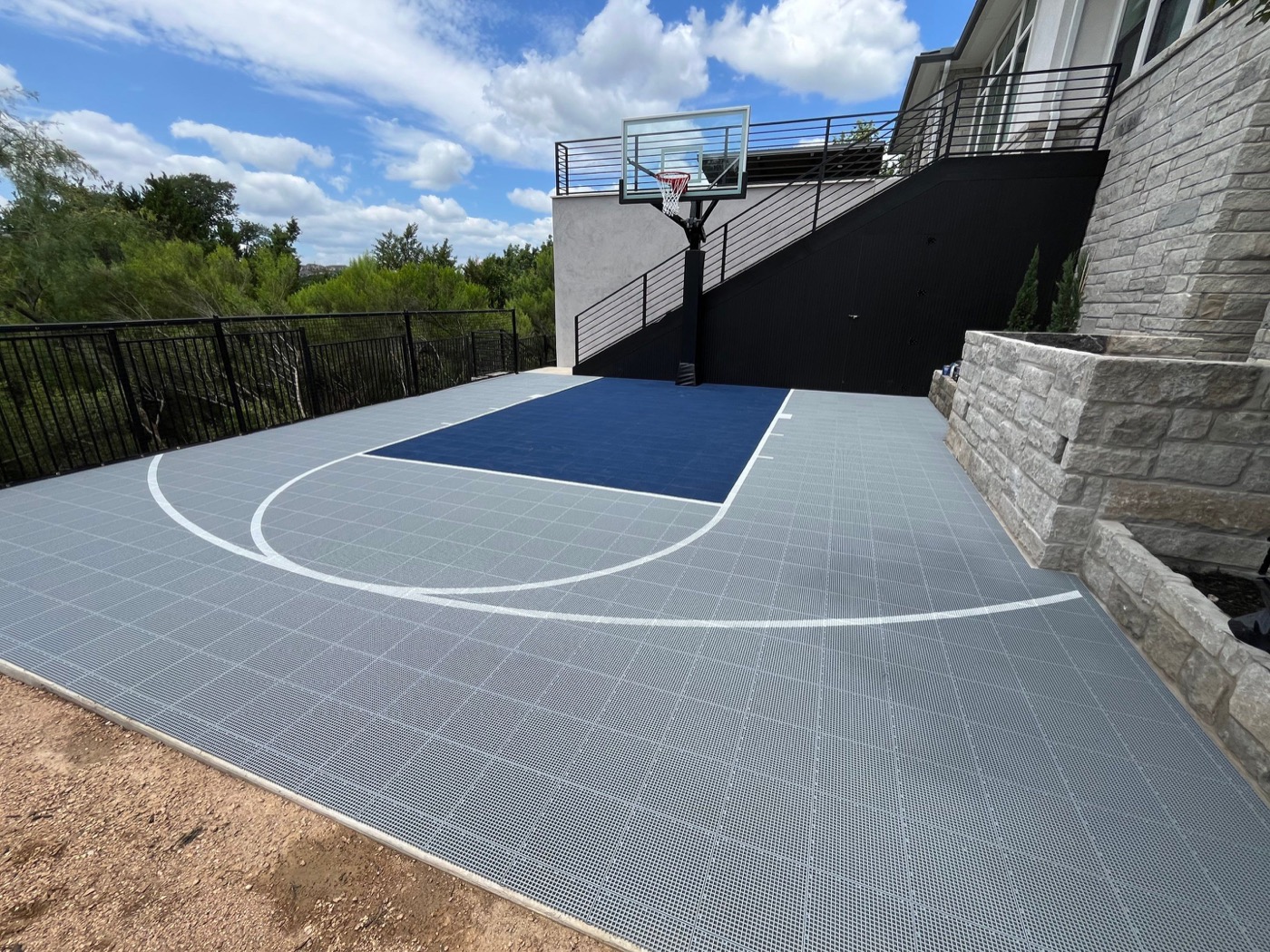
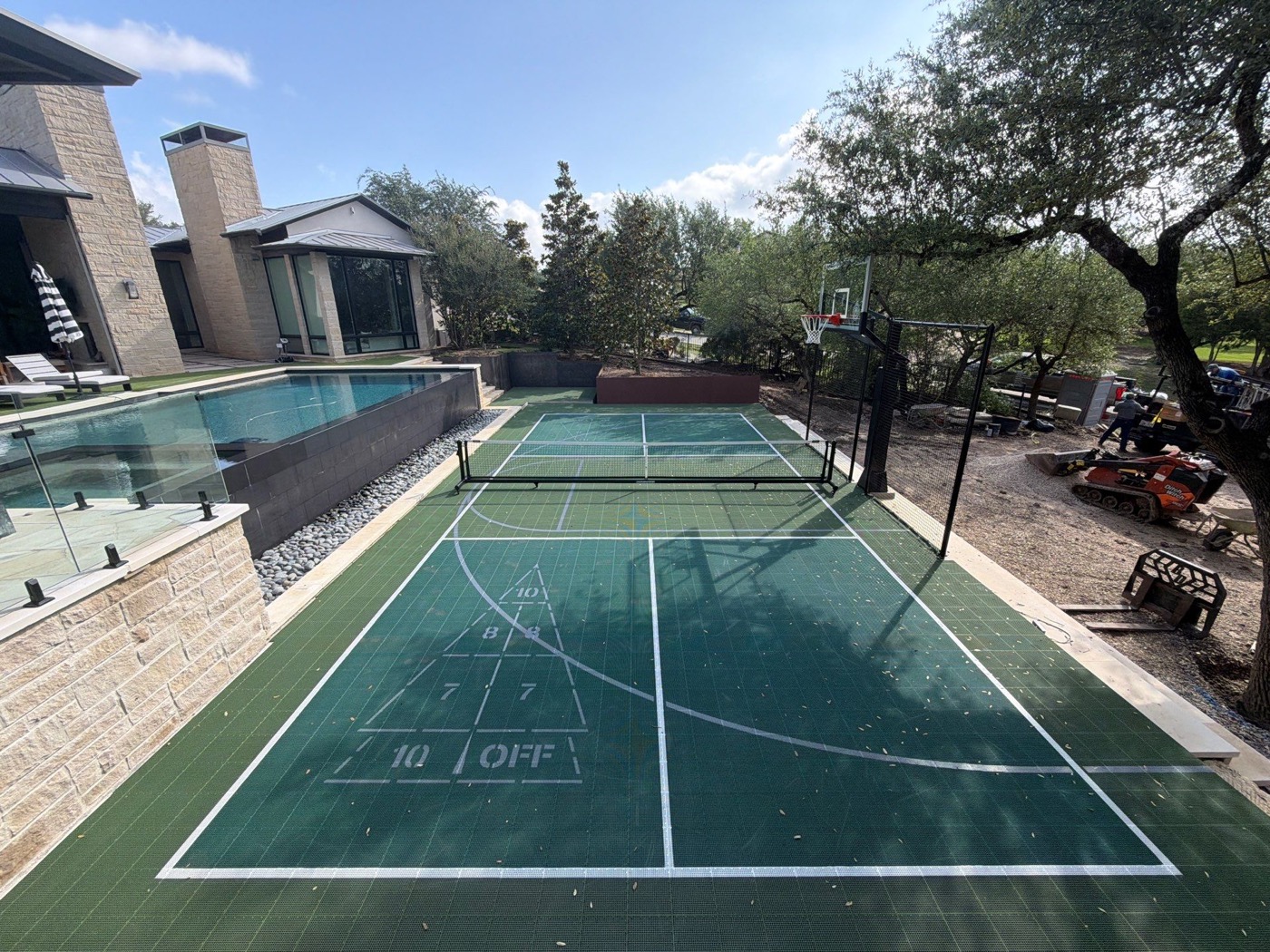
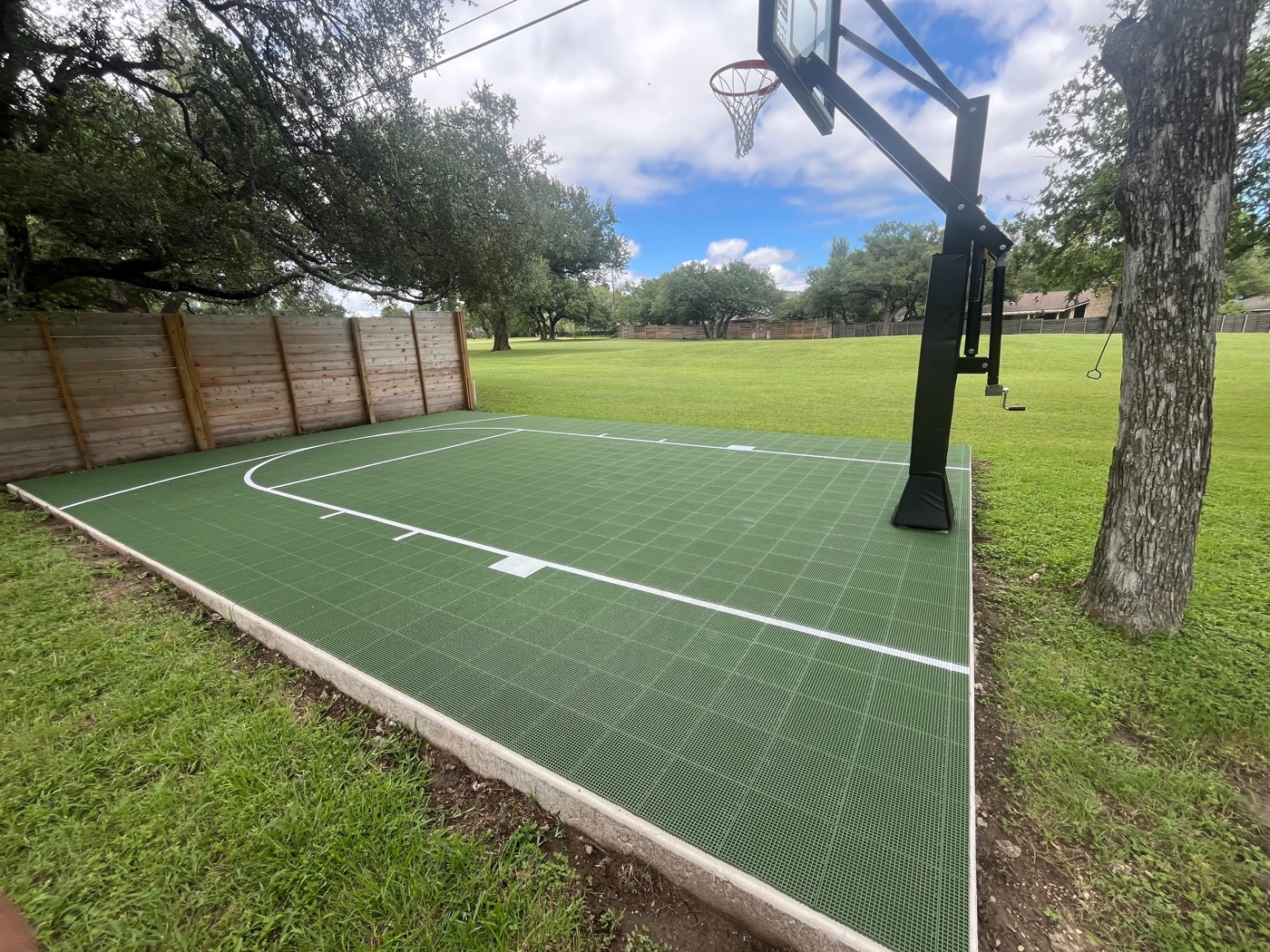
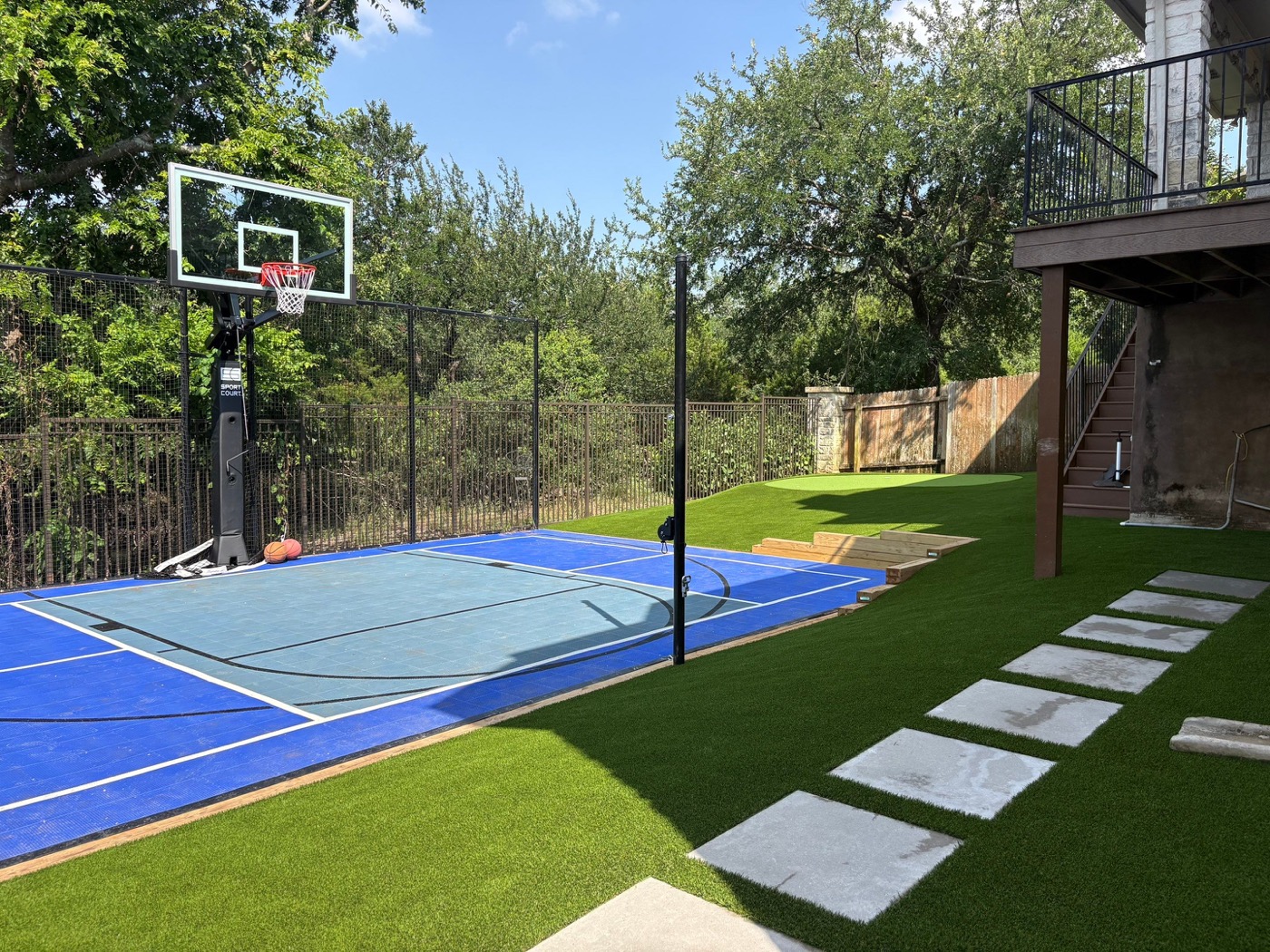
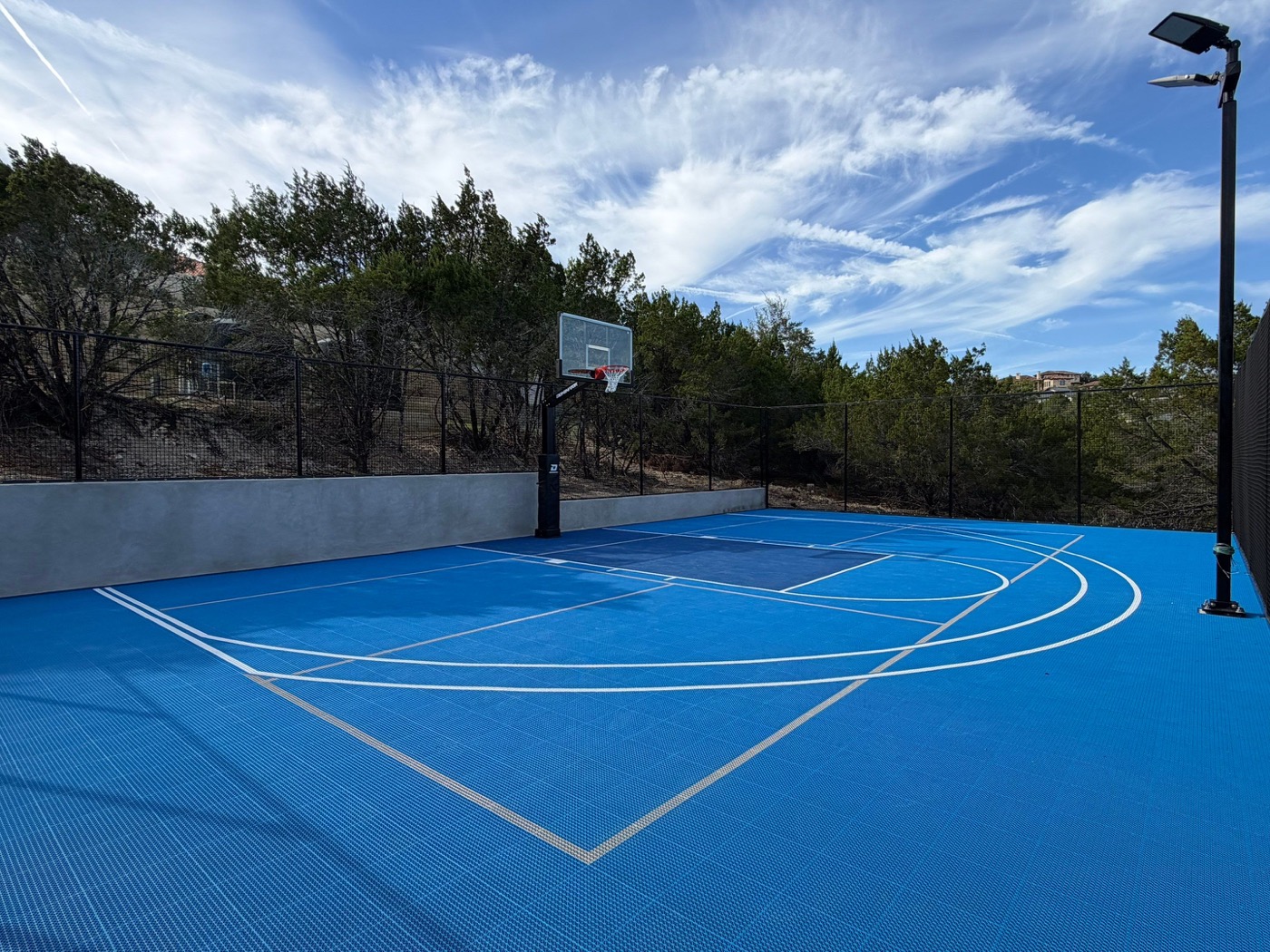
- Ultimate backyard multi-sport outdoor gym
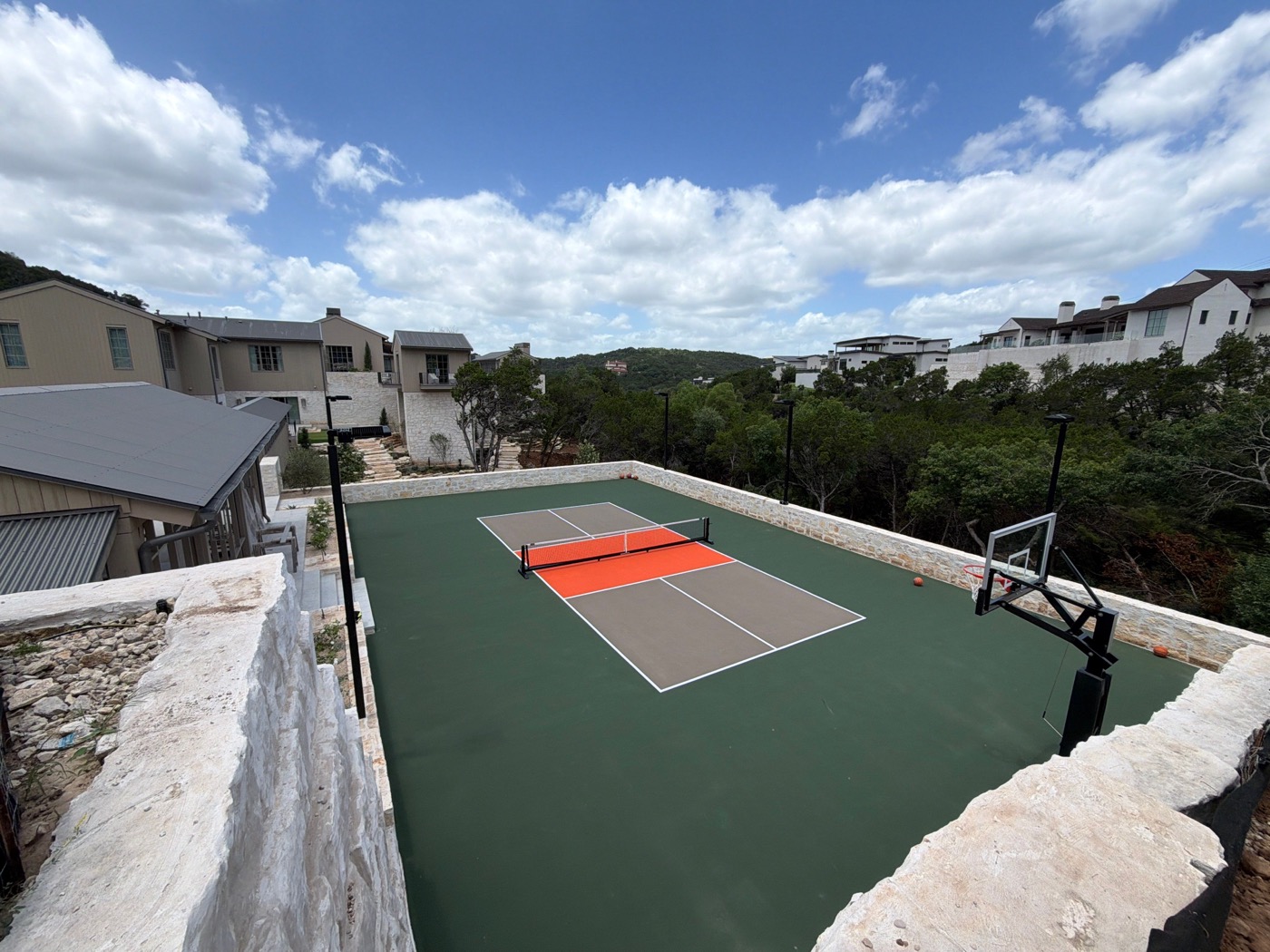
- Double pickleball game court
Builders




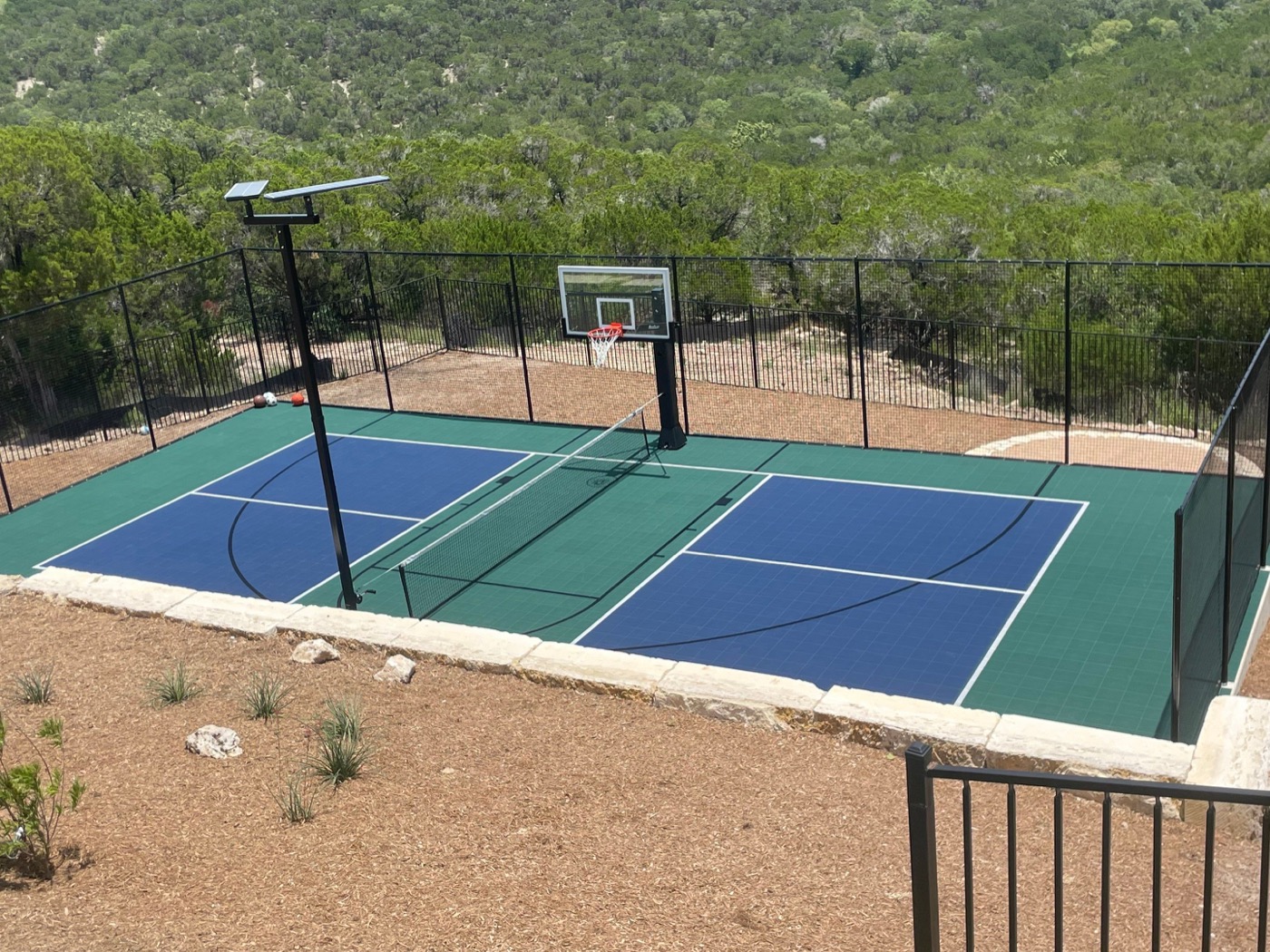
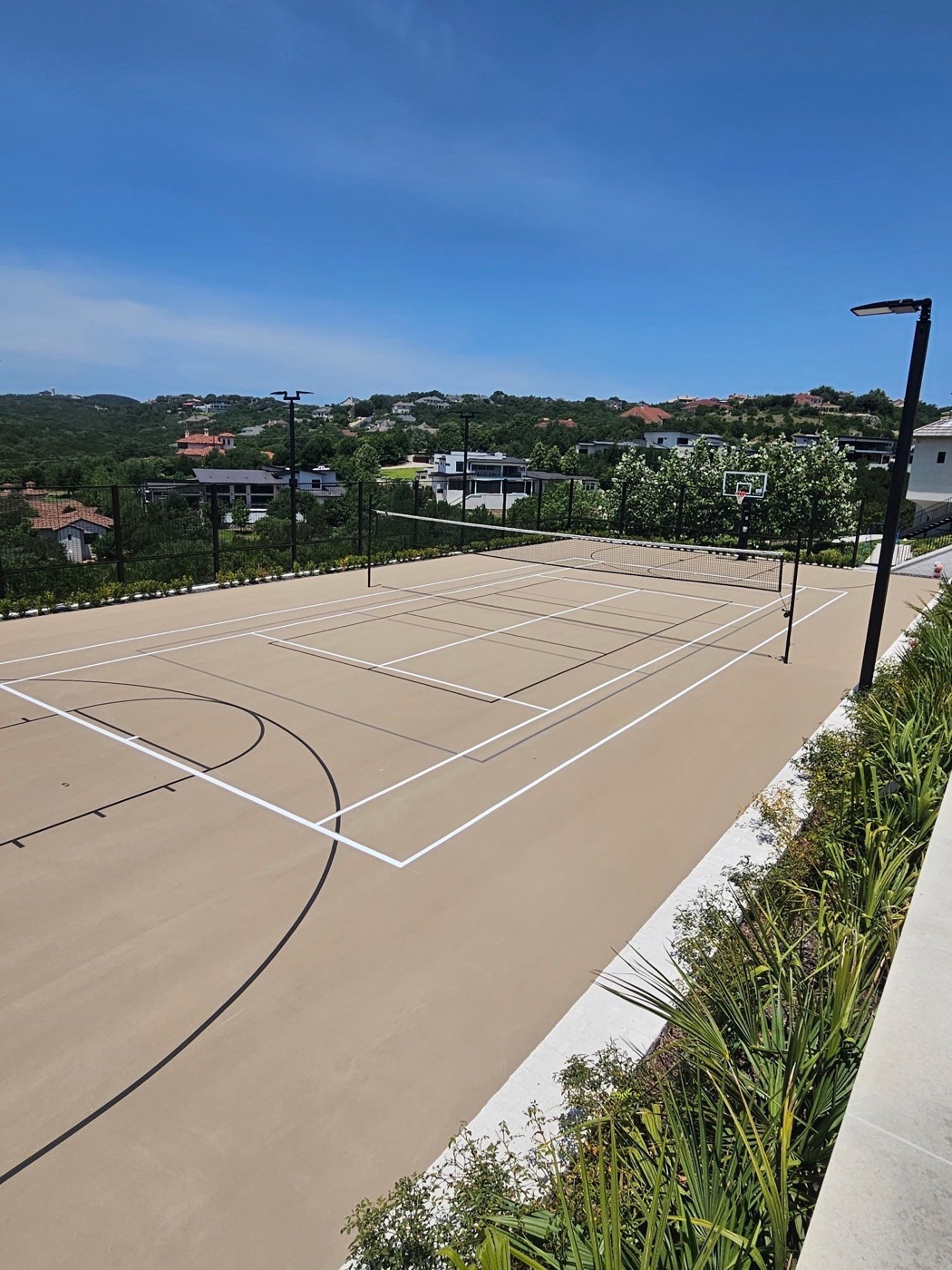
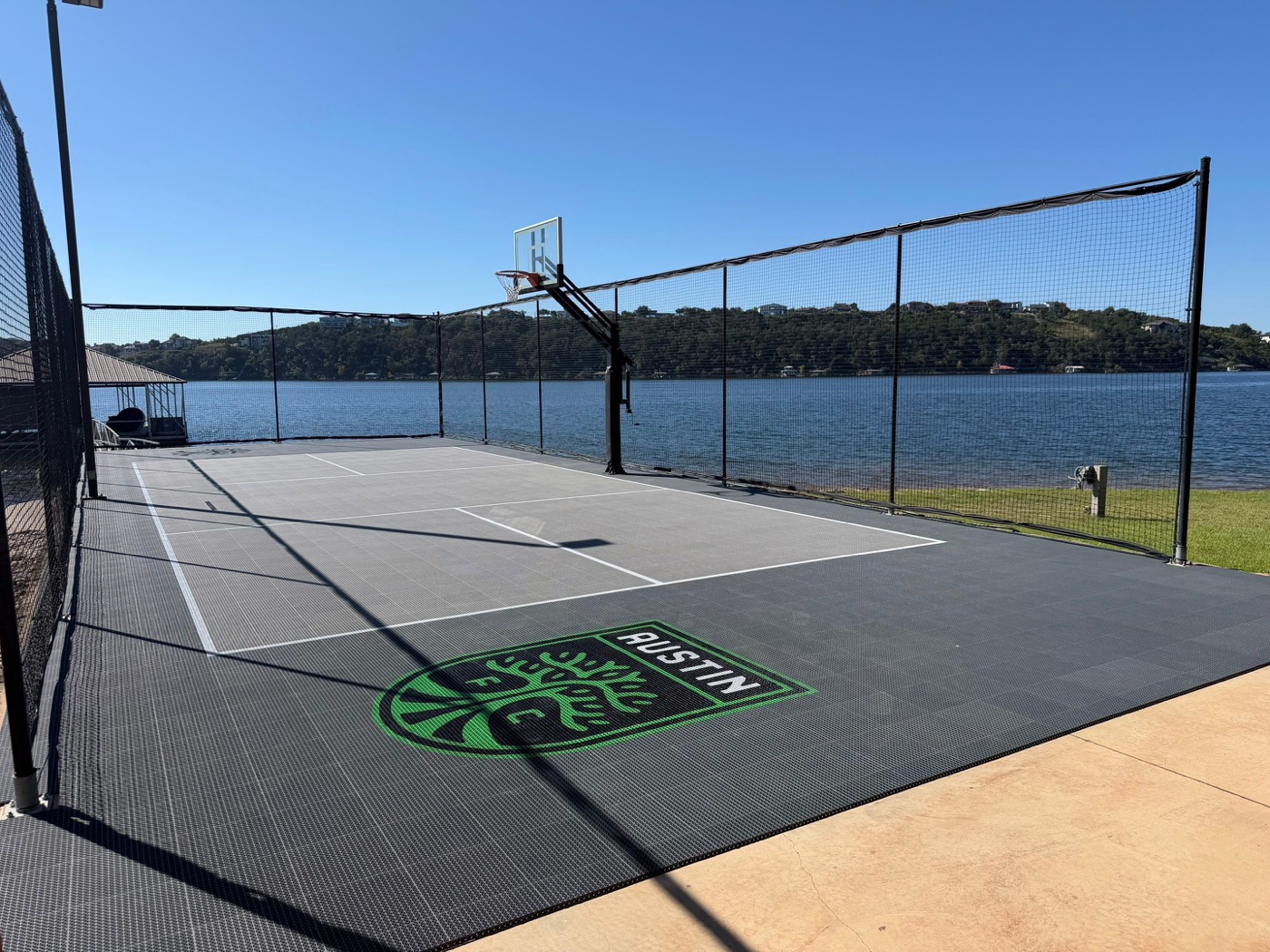
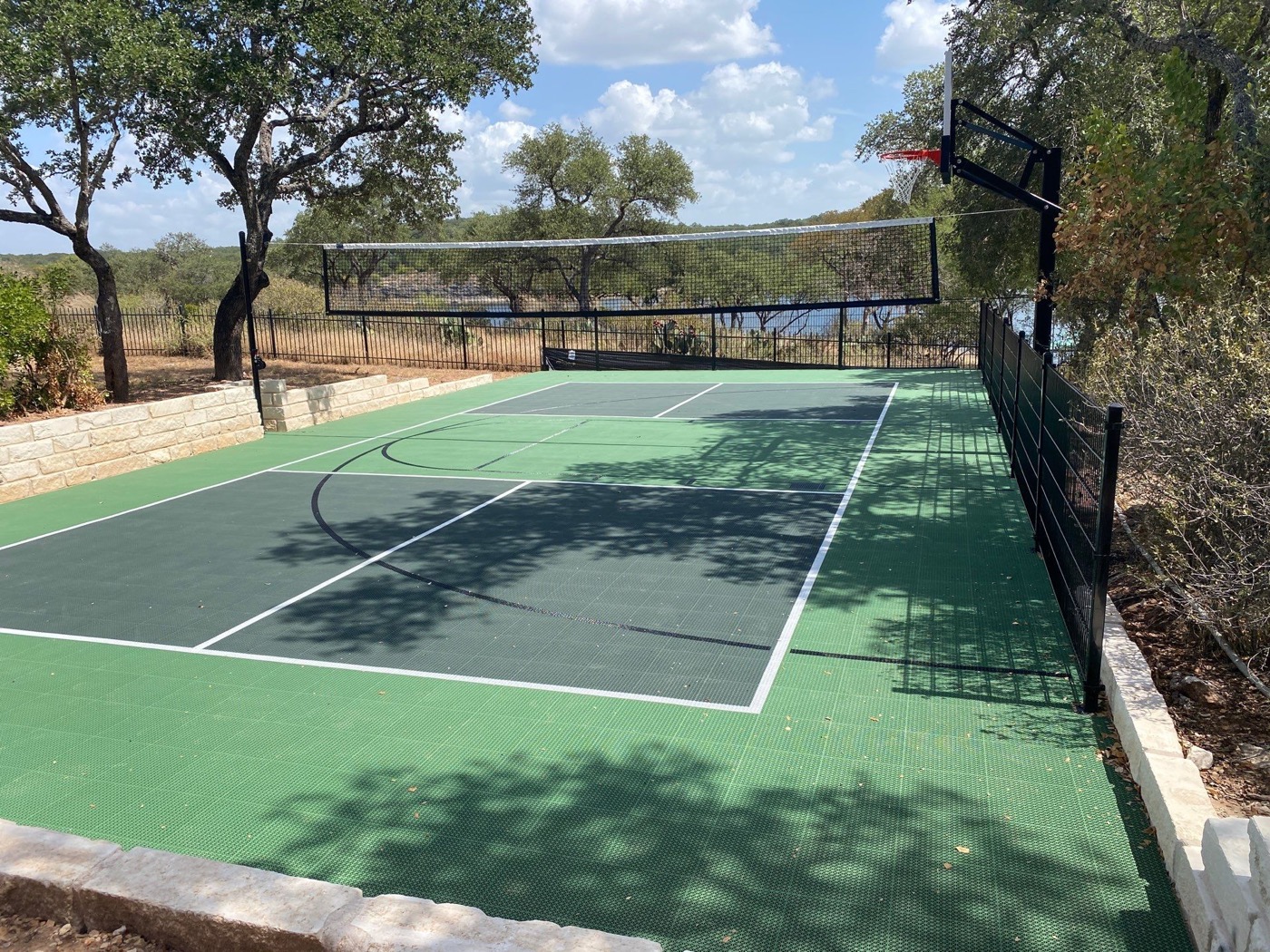
Completed courts
Follow along
From their blog
- Half Court vs. Full Court: Sizes, Costs & Which Is Right for You
Helps decide between a half court and a full court. Lists a residential half court at about 28 x 45 ft, a backyard full court starting near 65 x 35 ft, and a 30 x 60 ft upgrade that also fits pickleball, plus slab needs for tile (4 inch) versus acrylic (5 inch post-tension).
- Pickleball Court Surfaces Compared: Tile, Acrylic & Cushioned
Weighs modular tile against standard and cushioned acrylic for pickleball. Tile runs half an inch to three-quarters of an inch thick on a 4-inch slab with a 10 to 20 year warranty, while acrylic needs a 5-inch post-tension slab and fresh color coats every five to seven years.
- Tennis & Pickleball Court Resurfacing: 4 Options Compared
Compares four ways to fix a failing asphalt tennis or pickleball court, using a 60 x 120 ft court as the basis. Ballparks run from about $20,000 for an acrylic resurface up to $150,000 to $250,000 for a full rebuild, with lifespans and warranties for each.
- What Size Basketball Court Is Right for Me?
Answers how big a basketball court should be for a given yard. Covers widths from 20 to 60 ft, full-court lengths from 60 to 106 ft, half courts of 30 to 34 ft, and a suggested 50 x 80 ft footprint for recreational backyard play.
- What Is Post-Tension Concrete (and Why It Matters for Courts)
Explains what a post-tension slab is and why acrylic game courts use one. Gives about 5 inches of thickness, a 9 to 10 inch edge beam, cables roughly 4 ft apart, 3,500 PSI concrete, tensioning at 10 to 14 days, and a 1 percent minimum slope, contrasted with rebar slabs.
- Court Lighting: Keep Playing After Sunset
Explains how to light a court for evening play. Offers foot-candle targets for basketball, pickleball and tennis, and compares 16 ft LED poles, low fence-line LED fixtures and solar units, with notes on wiring and planning power before concrete is poured.
- Rooftop Pickleball in Austin: Why the Right Surface Matters
Looks at which surface suits a rooftop pickleball court. Contrasts heavy roll-out mats that shift, curl and need regular cleaning with a modular tile system that drains fast and grips better, using one Austin rooftop group's switch as the example.
- Options for Finishing the Perimeter of Your Court
Walks through ways to finish a modular tile court's edge. Compares a standard trimmed edge, edge ramps, security edging and rubber molding for curves, and explains why the tile gap is smallest in summer and widest in winter.
- What Beach Volleyball Net System Is Right for Me?
Helps choose a net system for a beach-style volleyball court. Compares competition, slider-style, recreational and fixed-height systems by fit, advantage and tradeoff, and gives 6-on-6 court size as 60 x 30 ft and 2-on-2 as 52 ft 6 in x 26 ft 3 in.
- What Indoor Volleyball Net System Is Right for Me?
Helps choose an indoor volleyball net system by comparing carbon fiber, steel and aluminum poles. Covers relative cost, weight, flex and best-use settings, and says the main deciding factor is how often the system will be set up and removed.
- Why Our Backyard Court Became the Heart of Our Home
Makes the case for a backyard court as an alternative to a pool. Says courts cost less to maintain, work year-round, and avoid deep-end safety worries, and lists everyday uses from basketball and pickleball to parties and movie nights.
Talk to Austin Courts & Floors
Tell us about your court and where it is. We'll connect you with a verified builder who serves your area.
We only share your details with the builder you're asking about. No spam, no selling your information.
Sources: facts on this page come from Austin Courts & Floors's own website, checked 2026-11-25: /about-us/, /about-us/our-team-story/, /pricing/, /contact. Spot something out of date? Request a change.